Hot Flushes, Poor Sleep, Weight Changes? How Exercise Can Help During Menopause
Updated: Aug 15
Menopause can affect far more than your periods.
You may notice your sleep changing. Your joints might feel stiffer. Your energy isn't what it used to be. You may be gaining weight differently, losing strength or finding that the exercise you used to do simply doesn't feel the same anymore.
These changes are real.
During perimenopause and menopause, changing hormone levels can affect muscle, bone, body composition, sleep, mood and how your body responds to exercise.
Exercise can't stop menopause or remove every symptom. But the right type and amount of exercise can support your body through these changes, and that's where Exercise Physiology can help.

Why does exercise become so important during menopause?
As oestrogen levels change and eventually decline, maintaining muscle and bone becomes increasingly important. Body composition can change, and some women also experience increased joint stiffness, changes in recovery, disrupted sleep and lower energy.
This doesn't mean you suddenly need to exercise harder.
In many cases, it means you need to exercise smarter.
A personalised program can focus on the areas that matter most for your health now, rather than simply repeating the exercise routine that worked for you ten years ago.
Feeling weaker or losing muscle?
Muscle mass naturally becomes harder to maintain as we age, and menopause adds another reason to make strength a priority.
Resistance training provides a stimulus for your muscles to adapt and become stronger. It can also support bone health, joint function and your ability to perform everyday activities.
And strength training doesn't have to mean lifting extremely heavy weights.
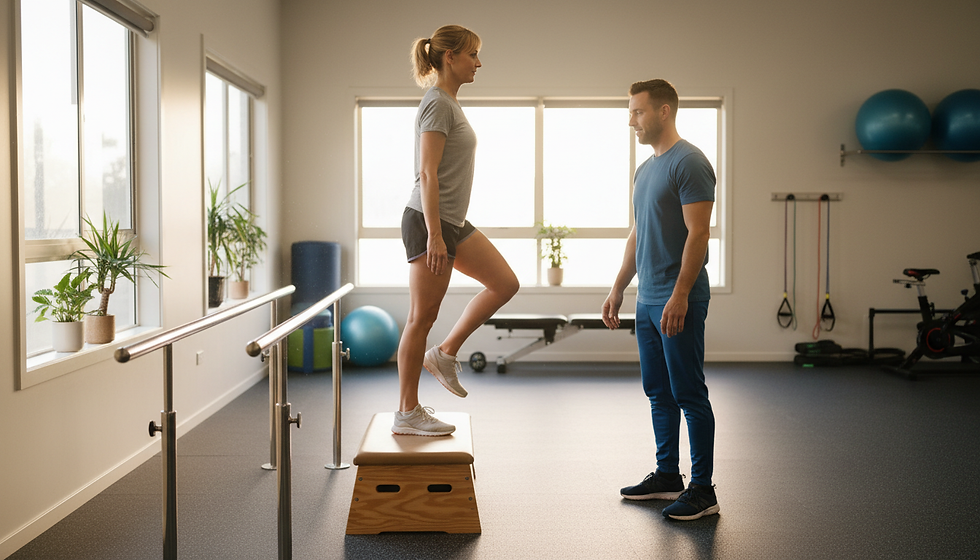
Depending on your ability and health, your program might include resistance machines, dumbbells, resistance bands, bodyweight exercises or functional movements such as squatting, stepping, pushing, pulling and carrying.
The important part is that the exercise is appropriate for you and progressively adjusted as you get stronger.
Joints feeling stiff or achy?
Some women notice more joint or tendon discomfort through perimenopause and menopause.
When your body feels sore, it's understandable to think you should move less.
But stopping exercise altogether can also mean losing strength and physical capacity.
An Exercise Physiologist can help determine what you can comfortably tolerate and adjust the type, intensity and progression of your exercise accordingly.
The aim isn't to push through pain.
It's to find a level your body can manage and build from there.
Worried about your bone health?
Bone health becomes particularly important during and after menopause.
Strength and appropriately prescribed weight-bearing exercise can form an important part of maintaining bone health, while balance training can help reduce falls risk.
If you've been diagnosed with osteoporosis or have other health considerations, your exercise program may need to be modified. The original article also notes that certain movements may not be appropriate for people with osteoporosis, which is another reason individual assessment matters.
Weight changing even though your habits haven't?
This can be one of the most frustrating parts of menopause.
Changes in body composition during midlife aren't simply a matter of willpower. Hormonal changes occur alongside factors such as sleep disruption, stress, changes in muscle mass and metabolic health.
Instead of making exercise entirely about burning calories, we prefer to look at the bigger picture.
Strength training can help maintain muscle. Cardiovascular exercise supports heart health and fitness. Regular movement also supports glucose control and reduces prolonged periods of sitting.
Your progress isn't only what happens on the scales.
Feeling stronger, walking further, having more stamina and finding everyday activities easier are meaningful measures too.

Hot flushes and poor sleep?
Exercise is sometimes promoted as a solution for hot flushes, but the evidence isn't that simple.
Research on whether exercise directly reduces hot flushes is mixed, so we wouldn't promise that exercise will make them disappear. Regular physical activity can, however, support broader areas of health including cardiovascular fitness, stress management and sleep.
If hot flushes or poor sleep are affecting your ability to exercise, your program can also be adapted.
That might mean changing exercise intensity, allowing more recovery, training in a cooler environment or modifying your session on days when your energy is particularly low.
Some days feel good. Others don't?
That's normal too.
Menopause symptoms can fluctuate, which means a rigid exercise program isn't always the best approach.
On a good day, you might be ready for a more challenging strength session. After a terrible night's sleep or when symptoms are particularly noticeable, your program might need to be adjusted.
The original article describes this well: exercise can remain consistent without forcing your body through warning signs.
Personalised doesn't just mean choosing different exercises.
It means adjusting what you do according to how your body is responding.
What type of exercise should you be doing?
There isn't one perfect menopause workout.
A well-rounded program will often include a combination of:
Strength training to support muscle, bone and physical function
Cardiovascular exercise to support heart health and fitness
Balance training to support stability and reduce falls risk
Mobility and flexibility work where appropriate to support comfortable movement
Exactly what that looks like will depend on your health, symptoms, current fitness and goals.
That's why copying someone else's menopause workout from social media isn't necessarily the answer.

You don't have to just put up with feeling different
Menopause is a normal stage of life, but that doesn't mean you have to accept losing strength, confidence or the ability to do the things you enjoy.
The goal isn't to exercise your way out of menopause.
It's to give your body the strength, capacity and support it needs for the years ahead.
And if you're not sure what exercise is appropriate for you now, that's exactly the sort of question an Exercise Physiologist can help answer.
Not sure where to start?
You don't need to work that out on your own.
Speak with one of our Accredited Exercise Physiologists about what's been happening, what you'd like to get back to and whether Exercise Physiology is the right next step for you.
Book an Assessment or Chat to an EP to get started.